Longer Itineraries
Feeling the Mysteries of Nature in Tokyo and Kyushu
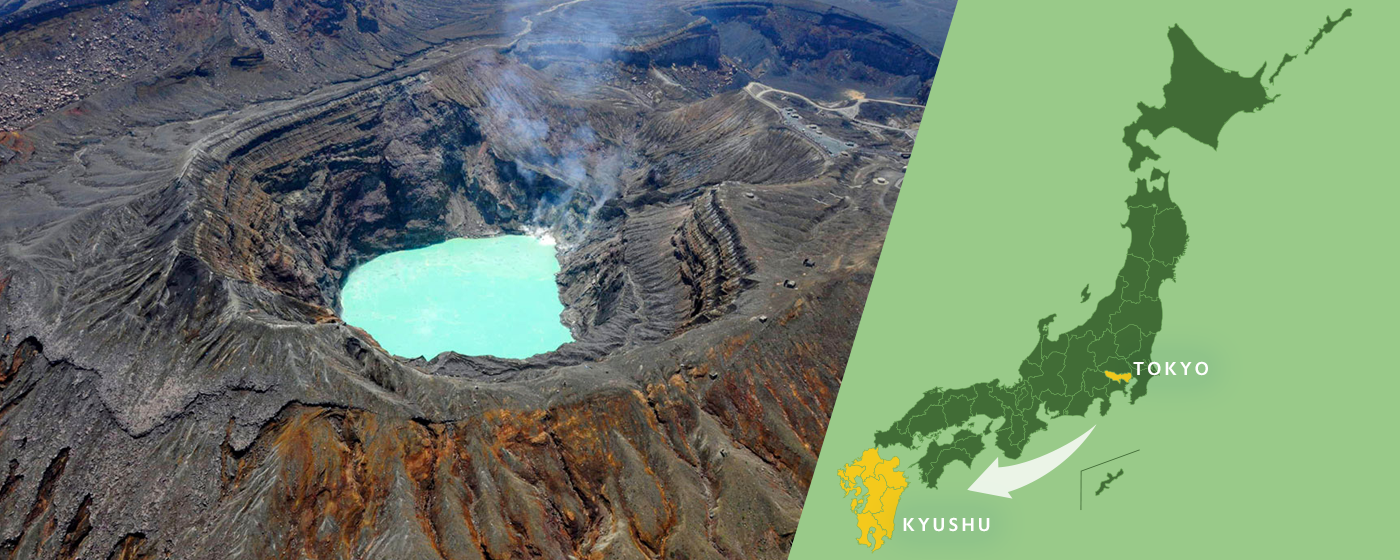
This journey will take you to Mt. Takao in Tokyo, which is easily accessible from the city center and visited by many tourists, and to a wealth of naturally and spiritually fascinating spots in Kyushu. The breathtakingly beautiful and mysterious scenery created by nature, along with the majesty of the Earth, are full of surprises and excitement. This journey will take you on a luxury trip that will heal and refresh your body and mind.


*The times represent the approximate time needed to travel between major spots.
Day 1
Departure from Tokyo Station and Leisurely Shopping at MORIPARK Outdoor Village
When going on a journey to enjoy nature, it is important to prepare in advance. Begin your journey by taking a leisurely shopping trip to Akishima, which is a bit calmer than the center of Tokyo.
The new "MORIPARK Outdoor Village" commercial facility lets visitors experience the charms of the outdoors, providing an environment where visitors can enjoy not only shopping and gourmet food, but also fun outdoor activities such as a miniature hiking course, open grassy spaces, a rock climbing wall, and more.
The new "MORIPARK Outdoor Village" commercial facility lets visitors experience the charms of the outdoors, providing an environment where visitors can enjoy not only shopping and gourmet food, but also fun outdoor activities such as a miniature hiking course, open grassy spaces, a rock climbing wall, and more.
1
Snow Peak at MORIPARK Outdoor Village
Snow Peak is a comprehensive manufacturer of outdoor products, boasting industry-leading quality with a focus on materials and functions. With their sophisticated designs, Snow Peak products are overwhelmingly popular both in Japan and abroad. MORIPARK Outdoor Village has a Snow Peak store where you can purchase a wide range of outdoor products for campers of any level, from beginner to veteran. Snow Peak also posts camping meals and outdoor information on their official Instagram account, which can help in collecting information before going camping.


 30 minutes by train(JR)
Day 2
Enjoying Tokyo's Nature at Mt. Takao, a Three Michelin Star Mountain
Once you are ready to enjoy nature, ease into it at Mt. Takao, where you can easily savor nature.
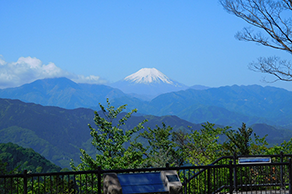
One of the great things about Mt. Takao is the easy access from the center of Tokyo, with tourists visiting it throughout the year. Mt. Takao was also awarded three stars by the Michelin Guide, the same as Mt. Fuji.
One of the great things about Mt. Takao is the easy access from the center of Tokyo, with tourists visiting it throughout the year. Mt. Takao was also awarded three stars by the Michelin Guide, the same as Mt. Fuji.
2
Mt. Takao
Mt. Takao has beautiful nature no matter the season and seven hiking trails of varying difficulties. In addition to worshippers visiting Takao-san Yakuo-in Yuki-ji Temple, it is also a popular sightseeing destination to visit for many people every year. You can get halfway up the mountain by cable car or chair lift, and to the summit of Mt. Takao with a 40-minute walk from Takaosan Station (cable car) via Yakuoin.
 45 minutes by train(JR)
 45 minutes by bus
 JAL Show details
90 minutes by highway bus
Days 3 to 12
Head to Kyushu in Search of Mysterious Natural Scenery
Kyushu has had deep ties to other Asian countries such as China and the Korean Peninsula since ancient times.
It is said that the Kingdom of Yamatai, which appears in the account of the Wa people (Gishi-Wajinden), part of the Chinese historical account the "The Record of the Three Kingdoms (Sangokushi)," existed in Kyushu. The region has deep connections with Japanese mythology, such as in the areas around Hyuga and Takachiho, and the region also has a powerful, mysterious charm.
Visitors to the Usuki Stone Buddhas, one of Oita's national treasures, can imagine how people lived in the ancient times. Amanoiwato Shrine in Miyazaki, which features prominently in Japanese mythology, is also a must-see location.
After learning about the relationship between volcanoes and religion at Mt. Aso Nakadake crater in Kumamoto, you will head to see the mangroves of Amami Oshima island in Kagoshima, which were registered as a World Natural Heritage Site in 2021. You will also have the opportunity to enjoy the wonderful views together with a canoeing expericence.
To conclude your journey, you will go on a hike while basking in the magnificent nature at Shiratani Unsuikyo Ravine in Yakushima island in Kagoshima. The spectacular scenery will move you and cleanse your soul.
3
Usuki Stone Buddhas (Usuki City, Oita Prefecture)
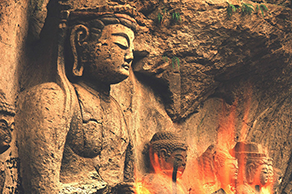
The Usuki Stone Buddhas are carved to represent Furuzono Sekibutsu Dainichi Nyorai and are said to have been created from the late Heian period to the Kamakura period.
In terms of scale and quantity, the high quality of the carving of the stone Buddhas is representative of Japan, and on June 15, 1995, the statues were designated as National Treasures, the first stone carvings to receive such a designation and the first national treasure in Kyushu.
There are over 60 stone Buddhas, of which 59 are national treasures.
The stone Buddhas are divided into 4 groups, with each group given a name determined by their location. The grups are called the First Hoki group (Dogasako Buddhas), the Second Hoki group, the Sanno group, and the Furuzono group, respectively.
Each is a masterpiece of outstanding work and the expressive figure of Buddha gives peace of mind to visitors.

 120 minutes by car
4
Amanoiwato Shrine / Amanoyasukawara
This shrine venerates the nearby site of the Amanoiwato or holy rock cave where, according to Japan's oldest chronicles, the Kojiki and Nihon Shoki, the sun goddess Amaterasu hid herself when she was angered by the violence of her brother Susano-o. Approximately 10 minutes on foot from the shrine is the Amano Yasugawara cave where eight million gods are said to have gathered to discuss how to lure Amaterasu Omikami from her cave.
 90 minutes by car
5
Mt. Aso Nakadake Crater
This magnificent caldera extends 24 km north-south and 18 km east-west, and craggy volcanic rock faces cover an area of 4 km around it. Aso Gogaku, the Five Peaks of Aso (Mt. Nekodake, Mt. Takadake, Mt. Nakadake, Mt. Eboshi and Mt. Kishima), soar upwards from the central part of the caldera; currently, Mt. Nakadake is continuously active, emitting white smoke. This caldera, located on Mt. Nakadake, is one of the largest in the world. This huge volcanic crater has a diameter of 600 meters, depth of 130 meters, and circumference of 4 km, and visitors can enjoy dynamic scenery and the “living” Mt. Aso here. When the volcano becomes particularly active, visitors cannot go near the crater.
 80 minutes by car
90 minutes by bus
JAL Show details
120 minutes by car
6
Mangrove Park (Amami Oshima)
Amami Oshima, known as the Galapagos of the East, is covered in nature. In the mystical mangrove forests, which are inhabited by various wildlife, you can have a canoeing experience. At these mangrove forests, the second largest in Japan, you can experience touring from a canoe as you pass through tunnels that reach just to the top of your head. A guide will accompany you so even beginners can relax and enjoy the experience.

 140 minutes by ferry
7
Shiratani Unsuikyo Ravine (Yakushima)
Shiratani Unsuikyo Ravine is a popular spot where even those who are not confident in their physical abilities can easily appreciate the primeval forests of Yakushima, including the yakusugi trees that are over 1,000 years old. This area is called the Mononoke Forest, as it became the inspiration for the setting of the film "Princess Mononoke." At 1,050 meters above sea level, Taikoiwa Rock offers beautiful views of Mt. Miyanoura and the Anbo River.

This journey involves a trip through the nature of Tokyo and Kyushu, providing the perfect opportunity to experience the beauty of nature, a variety of activities, and the faith and worship that are rooted in these two regions.
Example transportation have been provided for reference, but walking around and exploring in the areas near the spots introduced in this journey is also recommended.
*The information provided here is as of March 2022.
*Transportation information does not include the number of transfers or transfer time.
*Admission fees may be charged depending on the spot/facility. For the latest information on business hours, days when spots/facilities are regularly closed, prices, etc., please check the official website for each spot/facility or check directly with the spot/facility.